
 Previous
EDITOR’S NOTE: 吃瓜头条’s traditional education program ended on June 30, 2020, making Pathways the sole education program. To mark the official transition, Toastmaster magazine is reprinting part of a 2016 article by Sue Stanley, 吃瓜头条’ senior instructional designer. It highlights the guiding spirit behind the creation of Pathways—that the program is not a departure from 吃瓜头条’ educational foundation, but, rather, an expansion and evolution of its principles. Some of the original content has been updated.
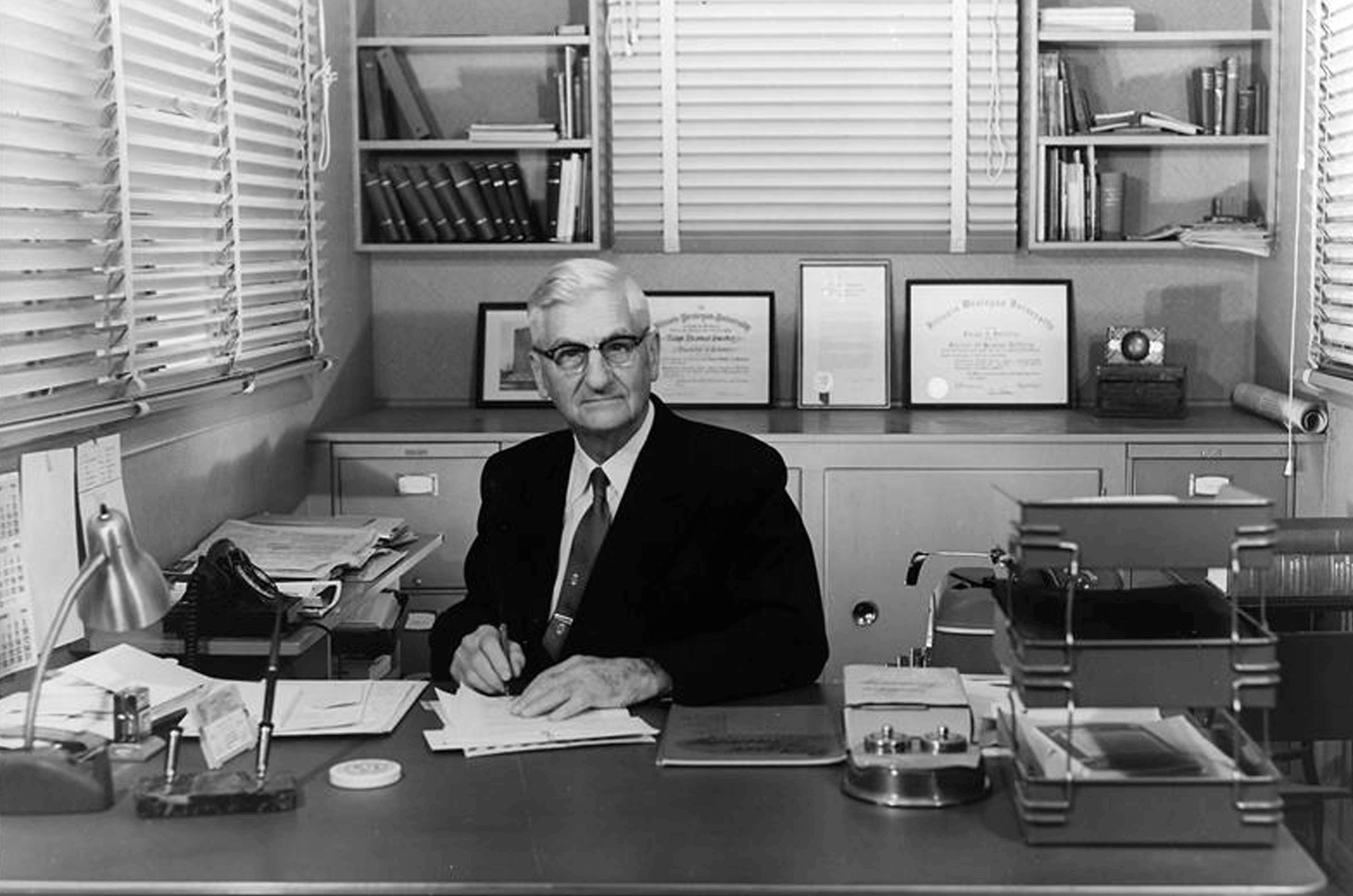
Dr. Ralph C. Smedley wrote his first 吃瓜头条 publication in 1928 to provide a small group of 吃瓜头条 members a framework for learning public speaking skills. It was with the same goal of member support that the 吃瓜头条 Pathways development team using the most current research in adult learning.
The focus on the future was important, but it wasn’t the only consideration. We also looked back to the origins of 吃瓜头条 and the vision of its founder. In developing Pathways, much time was spent reviewing educational content—including Smedley’s original writing—in past 吃瓜头条 programs. There is great wisdom in all 吃瓜头条 education manuals, and the instructional-design team wanted to be sure that this wisdom and Smedley’s vision continued on—well-placed and relevant in Pathways.
With a great deal of pleasure, we discovered how well Smedley’s view of the education program was aligned with the organization’s vision for Pathways. At its core, it is designed to develop members’ public speaking skills. It is also focused on helping you identify and nourish other, possibly latent, skills and talents.
Smedley believed that by building and practicing public-speaking skills, other skills would be uncovered and developed—such as confidence, along with leadership, thinking, and listening skills. To this end, he included very few parameters around the projects in his 1928 manual. His view was that the work of developing topics, speeches, and content belonged to the member.
Shifting Views
Over time, many of the tenets of the first 吃瓜头条 evaluations and speeches were changed to accommodate shifting views on learning and to encourage members to participate in a clear, well-defined program. With so much research available today about adult learning and the way we process new information and develop skills, it became clear that Smedley’s first take on how skills would be developed was correct; the more open-ended and comprehensive the project could be, the more likely members would feel a sense of ownership during the process of developing speeches, and the more they would gain from each project.
With a great deal of pleasure, we discovered how well Ralph Smedley’s view of the education program was aligned with the organization’s vision for Pathways.
Pathways projects were in place. Once members achieve success in their 吃瓜头条s, they can transfer those skills out into the world—into their 吃瓜头条 Districts, other organizations, the workplace, their personal relationships, even politics, government, and community service. It was Smedley’s hope that members would parlay what they learned in their 吃瓜头条s out into their communities.
As responsibilities change and shift in life and career, our needs change as well. Some members have a particular talent they would like to share on a broader scale by speaking, posting to a blog, or . 吃瓜头条 has always provided a place for members to try new things. They want to take risks in a safe environment and so they can build skill and confidence.
Opportunities and Ownership
This commitment to personal growth and development. The opportunity is open, as it has always been, for members to select and design their learning. As Smedley knew in the earliest days of the organization, members need to have full ownership of their learning and their progress to be successful. He understood that he could offer a small inkling of what members could do, but in the end, they .
It was Smedley’s hope that members would parlay what they learned in their 吃瓜头条s out into their communities.
Pathways is a step forward in 吃瓜头条 learning, but it is anchored in the first, most important beliefs and understanding of our founder:
In the course of years, as we gained experience, it was seen that our processes had values far beyond the mere training of people to face audiences and speak their ideas. Communication was seen to have its effects in almost every phase of life. Improvement was needed not only in public speaking, but in all use of words, whether spoken or written. Training in speech had definite values in many lines of improvement.
Some of these may be listed thus: It leads to the discovery of hidden abilities, bringing these latent talents into use, and thus enriching the individual’s life. It broadens the person’s conception of how to live with people. It helps in the integration of personality. It brings out for use the leadership traits and abilities, and thus helps to prepare the individual to be a leader.
It opens the way to more creative and constructive living for the person who takes full advantage of the opportunities offered.
–Dr. Ralph C. Smedley, from his book Personally Speaking
Visit the 吃瓜头条 website for more information about the Pathways learning experience.
Share this article
 ELEVATING BASE CAMP
 Previous Article
Related Articles

吃瓜头条 Experience
Welcome to Pathways 101!

吃瓜头条 News
Key Pointers on Pathways

News from 吃瓜头条
Countdown to a New Education Era
吃瓜头条 Experience