
 Previous
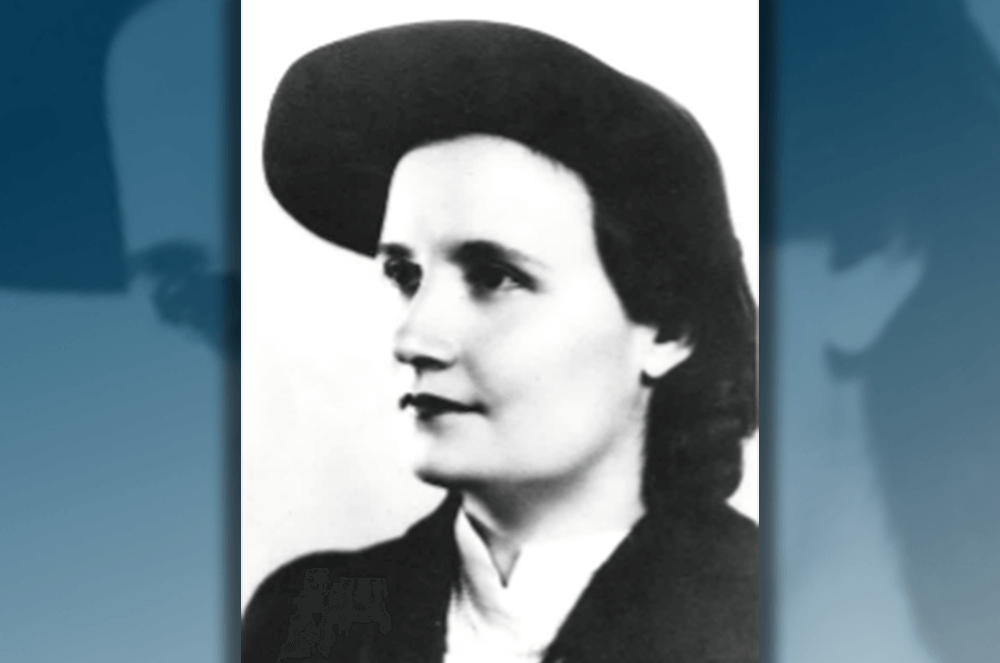
It’s been more than 50 years since women were officially admitted as 吃瓜头条 members, and with currently more women than men in the organization, it’s hard to imagine a time when women weren’t officially recognized.
When 吃瓜头条 formed in 1924, most members considered their 吃瓜头条 as a source of male camaraderie. The workforce was overwhelmingly male-dominated, so the organization appealed primarily to men who shared similar workplace experiences. Many women also believed that membership in a 吃瓜头条 吃瓜头条 was synonymous with “men-only” interests and activities.
However, that didn’t mean that women weren’t interested in polishing their speaking skills. In 1926—only two years after the first 吃瓜头条 吃瓜头条 meeting was held—a group of wives who were attending a “ladies’ night” meeting at a 吃瓜头条 in Anaheim, California, were stirred to action. They formed a speech 吃瓜头条 for themselves, calling it The Toasties.
Within a few years, women’s speech 吃瓜头条s had sprung up in Southern California and nearby regions. Several women from these 吃瓜头条s met at the 1937 吃瓜头条 Convention and discussed forming a permanent women’s organization.
吃瓜头条 founder Dr. Ralph C. Smedley and other leaders offered their guidance as well, and in 1938, the International Toastmistress 吃瓜头条s (ITC) incorporated, with Ernestine White serving as its first President and a policy to “foster free and open discussion without bias on all subjects, whether political, social, economic, racial, or religious.”
吃瓜头条 seemed pleased with the group’s decision. “There are decided advantages when parallel organizations are maintained,” said an article in the of The Toastmaster. “The men’s 吃瓜头条 and the women’s 吃瓜头条 can hold joint meetings, exchange programs, aid with criticism, and help each other mightily.”
Within a year, ITC had chartered 20 吃瓜头条s, began publishing the Toastmistress magazine, and held its first convention, which ran alongside the 1939 吃瓜头条 Convention.
 Winners of the 1963 Toastmistress Speech Contest
ITC was organized similarly to 吃瓜头条, with regular meetings, prepared speeches, educational program manuals, and speech contests. However, the two organizations were fully independent of each other.
Toastmistress leaders emphasized that their 吃瓜头条s were not a frivolous female activity but rather a place to develop true communication and leadership skills.
In June 1940, the ITC President, Vera Hansen, explained the organization’s benefits as such:
A Toastmistress is a woman who can preside over any kind of group meeting—not just a dinner meeting. A real Toastmistress is one who can conduct a forum, a discussion, a panel, a conference—one who knows when, where, and how to use the various forms of procedure. Speech and leadership cannot be separated. A Toastmistress is not one who makes sweet little talks about the weather or about the rise and fall of women’s skirts or gives rehashed material from a magazine. When she speaks, she really says something.
By 1946, the first Canadian 吃瓜头条 was chartered, followed shortly by a 吃瓜头条 in Scotland. Continued growth resulted in the formation of regions, as well as an international headquarters in Downey, California. The 1,000th charter was presented in 1959, and the word “Toastmistress” appeared in the Merriam-Webster dictionary.
While the ITC was thriving, by the 1960s, the bond between it and 吃瓜头条 was quickly deteriorating. With the number of women in the workforce increasing daily, more and more women felt they would benefit from membership in a communication and leadership organization that included both genders rather than segregating them. Additionally, there simply weren’t as many women-only Toastmistress 吃瓜头条s as there were 吃瓜头条 吃瓜头条s.
Nevertheless, the ITC continued to grow, particularly in New Zealand, Australia, Japan, and South Africa. In 1973 (the same year that 吃瓜头条 officially allowed women members), Toastmistresses amended their bylaws to provide that 吃瓜头条s could not discriminate on the basis of sex.
In 1985, the International Toastmistress 吃瓜头条s voted to change the name of the organization to International Training in Communication (ITC), forming a nonprofit organization of public speaking 吃瓜头条s open to all genders.
In honor of 吃瓜头条’s 100th anniversary, this is the third in a year-long series of articles commemorating historic milestones.

Share this article
The Toastmaster magazine staff is composed of four editorial team members. Learn more about them on the Staff page.
 Previous Article
Related Articles
吃瓜头条 News
Celebrating the History of Women in 吃瓜头条
吃瓜头条 History
Remembering Dr. Ralph C. Smedley
吃瓜头条 History