
 Previous
I was recently helping a CEO prepare for a conference panel. A longtime leader and expert in the field, he said, 鈥淣o worries. I can wing it.鈥�
Alarm bells went off in my head鈥攏ot because he lacked experience or confidence, but because he wasn鈥檛 fully appreciating what makes a panel appearance effective.
鈥淲inging it鈥� is often a recipe for disaster, which is why I like to say: The more you PREpare now, the less you鈥檒l need to REpair later.
Panel discussions may seem simple. Answer a bunch of questions on a subject you know well, right? But making the most of this opportunity requires precise communication, strategic engagement with other panelists, and tactical
responses to unexpected or adversarial questions鈥攁ll in short, friendly bursts that look effortless.
Here鈥檚 how to show up in your next panel prepared and confident鈥攚ithout needing to wing anything.
Prepare Points, Not Just Answers
A week or more before the conference, generate three to five core ideas you want people to remember. Focus on points that are unique, useful to the audience, and supported with data, logic, or storytelling. Even better if they connect to current events or industry trends.
If you鈥檝e developed a clever or very specific way to make a point, use it, but don鈥檛 script entire answers word-for-word. Internalize the concepts so your words come out naturally. Aim for precision, not perfection.
Do Your Homework
Before the event, review the conference website thoroughly and ask your contact questions to clarify the conference鈥檚 goal, your session鈥檚 objective, the nature of your audience, and the moderator鈥檚 background. Hopefully, you鈥檒l meet your moderator and fellow panelists beforehand, but don鈥檛 count on it.
Knowing these details will increase your comfort on the panel, help you meet audience and event expectations, and enable you to differentiate your expertise.
Own Your Introduction
Some moderators introduce the panelists themselves (in which case you should ask to review your portion in advance for accuracy). But if the moderator asks you to introduce yourself, focus on one or two parts of your professional story that support the conference鈥檚 theme and the points you鈥檒l be making. The purpose of an introduction is not to impress the audience, but to assert the speaker鈥檚 relevance to the discussion.
Lead With Your Answer
One of the most common panel mistakes is burying your point. To avoid this, always start with a direct, definitive answer that includes key elements of the question.
Once the audience hears your position, they鈥檙e prepared to hear you explain it. But if you start with a lengthy preface, they鈥檙e flying blind until you get to your point.
You鈥檝e probably heard advice on starting answers with 鈥済ood question!鈥� or 鈥淚鈥檓 glad you asked that.鈥� These insertions are unnecessary, but they can give you time to formulate your answer. The peril is saying them too often, which may seem like pandering. Stick to one or none and know there鈥檚 no harm in simply pausing before you answer鈥攊t demonstrates live thinking.
Tell Strategic Stories
Brief panel stories鈥攚hether case studies or personal narratives鈥攏eed to be relevant, not just riveting. To reinforce that relevance, follow each story with a statement that makes its point explicit: 鈥淭hat day, we learned ...鈥� or 鈥淭his story demonstrates why ...鈥�
鈥淪tories make you and your message memorable,鈥� says Eva Daniel, a public speaking expert and founder of The Speak Shop. 鈥淧repare three or four personal or professional stories you can share in a couple of minutes. Just make sure each story is relevant to the question you were asked so it can support the point you鈥檙e making.鈥�
Identify Pain Points
One of the best ways to connect with audiences is to identify what you have in common with them: the pain point.
Whether it鈥檚 a shared fear or a common obstacle, stories about challenges, setbacks, and assumptions proven wrong are typically more relatable, more dramatic, and contain the most valuable lessons.
Laura Mathis, senior coaching partner at The Speech Improvement Company, says, 鈥淐onference attendees crave candor. Fill that need by telling stories about your struggles and mistakes and what you learned from them, not just tales of success.鈥�
Interact Purposefully
Panels should feel like conversations, not a series of mini speeches. So engage other panelists by 鈥渁greeing with,鈥� 鈥渁dding to,鈥� or 鈥渂uilding on鈥� their answers.
However you join the conversation, make sure your contribution is additive, not repetitive. If you have something valuable and unique to say, say it after the preceding person has finished. If not, wait for the next question.
鈥淥ne way to make your point stand out is to explain how it differs from a fellow panelist鈥檚 response,鈥� says Amy Scarlino, CEO of Scarlino Speaker Strategies and a longtime expert in speaker program management.
鈥淓ven if you agree in principle, wrap your response in the context of your unique personal experience.鈥�
Handle Confrontation Constructively
Disagreement makes panels more exciting, but the tone should always be civil, not combative. It鈥檚 a conversation, not a talk show. The key to handling disagreement or criticism respectfully is framing your position in the context of your professional role, not as a universal truth:
- 鈥淚n my work, I see it differently because 鈥︹��
- 鈥淗ere鈥檚 another way to think about it 鈥︹��
- 鈥淚 appreciate that perspective. My experience has been slightly different 鈥︹��
If you get confrontational questions from the audience, what they typically want most is acknowledgment, not necessarily agreement. Simple phrases like 鈥淚 hear you,鈥� 鈥淚 understand where you鈥檙e coming from,鈥� and 鈥淭hanks for your perspective鈥� can provide that acknowledgment without conceding the point.
When you don鈥檛 know the answer to a question, say so. Or pivot with: 鈥淚 can鈥檛 speak to that, but what I can tell you is 鈥︹�� This phrase enables you to move smoothly from what you don鈥檛 know鈥攁nd aren鈥檛 expected to know鈥攖o what you do know and can competently address.
Remember that a panel is a purpose-driven discussion. Every minute you spend debating someone else鈥檚 point is a minute you鈥檙e not advancing your own.
Always Be Polite
Panel politeness is about the respect and attention you show other panelists. Give them a chance to speak and don鈥檛 interrupt them or finish their sentences.
I once attended a conference panel where a highly respected and experienced political advisor bloviated with every answer, interrupted panelists, and questioned their ideas. Despite his impressive credentials, his reputation took a serious hit.
鈥淲rap your response in the context of your unique personal experience.鈥�
鈥擜my Scarlino鈥淒on鈥檛 monopolize the discussion,鈥� says Daniel. 鈥淵ou may think your ideas are outstanding and essential, but this is a group discussion in which everyone should have equal opportunity to contribute.鈥�
I recommend the four-second rule: If the moderator asks an open question to all of you, feel free to answer first. Thereafter, wait four seconds before jumping in again. This pause gives more reserved panelists a chance to contribute.
Stay Engaged the Whole Time
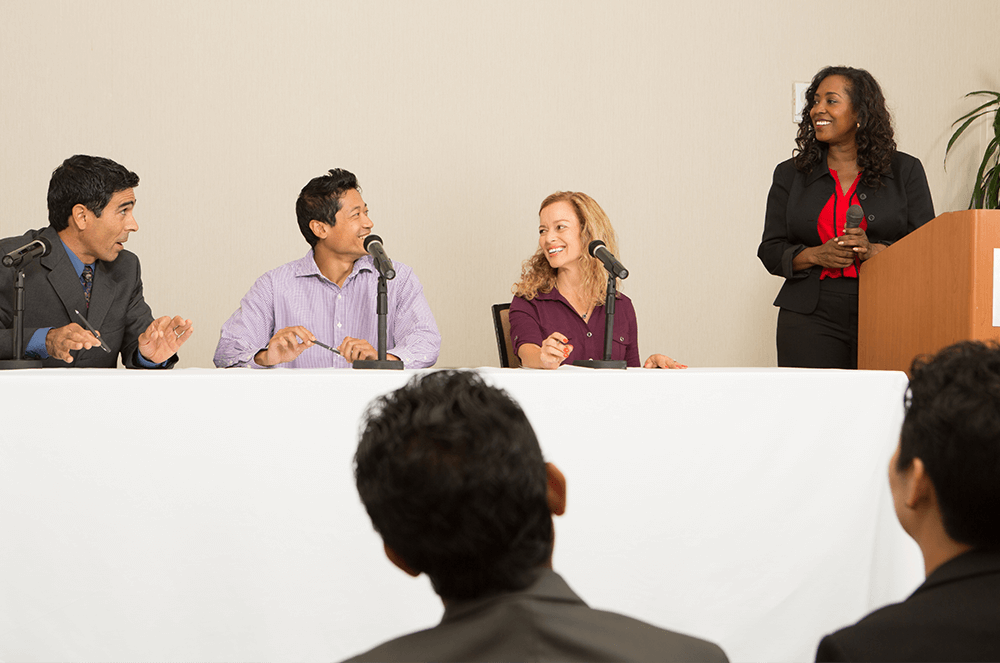
Even when you鈥檙e not speaking, you鈥檙e still in public view.
鈥淏ody language onstage is so important, whether you鈥檙e speaking or not,鈥� says Scarlino. 鈥淪it up and lean forward, nod when you agree, and laugh when appropriate. Speaker survey scores reflect that audiences stay engaged when panelists stay engaged.鈥�
Listening closely not only looks good on you. It can also give you a practical advantage when you want to refer back to panelists鈥� previous comments.
Leave Your Sales Hat at Home
While self-promotion isn鈥檛 on the agenda (and is a bad look if handled clumsily), that doesn鈥檛 mean you need to avoid saying your company鈥檚 name. Make references to your company and business if that context is important.
- 鈥淎t Costco, we have a policy 鈥︹��
- 鈥淥ne of the interesting things about working at Meta is 鈥︹��
- 鈥淲hen I started working at AARP, I saw how 鈥︹��
Keep self-references鈥攁bout yourself or your company鈥攆ramed in points, not superlatives.
Know When to Stop Talking
Giving concise answers on a panel requires knowing when to stop talking. After you hear each question, don鈥檛 think of what you want to say, but what you want your audience to take away. Once you鈥檝e delivered that takeaway, stop talking.
Train yourself not to end sentences with the word 鈥渁nd,鈥� which some people do instinctively, forcing themselves to speak even after they鈥檝e run out of things to say. Daniel recommends finishing each answer with a 鈥渟trong summary statement, not a mumble or a trail of filler words.鈥�
When a moderator asks 鈥淎nything else?鈥� or 鈥淔inal words?鈥� don鈥檛 introduce a brand-new point. Instead, reinforce a key takeaway you previously made.
Be Remembered
At the end of the day鈥攐r the end of a panel presentation鈥攏o one will remember who 鈥渨on鈥� the panel or seemed the most impressive. Audiences will remember the panelists who helped them think differently. If you use your content, communication, and courtesy to create that impact, you鈥檝e done your job and then some.

Share this article
Joel Schwartzberg is a presentation coach, executive communication specialist, and author of The Language of Leadership: How to Engage and Inspire Your Team and Get to the Point! Simplify, Sharpen, and Sell Your Message. Follow him on
 Previous Article
Related Articles
Presentation Skills
How To Be a Powerful Panelist
Presentation Skills
10 Ways to Add More Pizzazz to Your Panel Discussion
Presentation Skills